
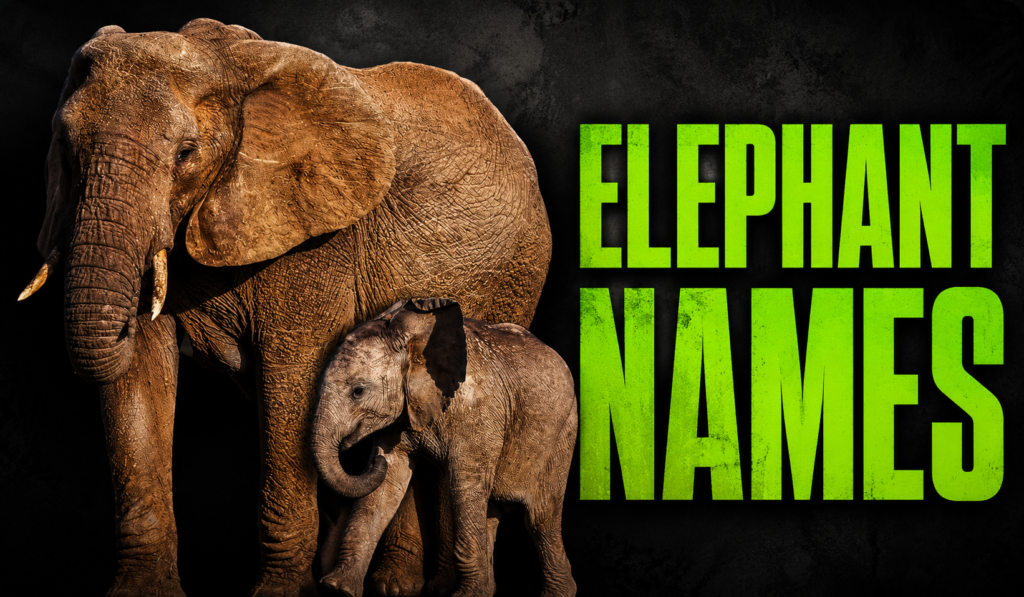
Choosing elephant names is rarely as simple as picking something that sounds nice. Whether you’re naming a sanctuary calf, a stuffed elephant for a child, a conservation mascot, or a character in a story, the name you land on shapes how people feel about that animal — sometimes for decades. From ancient Sanskrit mythology to modern animated films, elephant naming traditions span continents and centuries, each carrying its own logic, beauty, and cultural weight. This guide brings together the most meaningful categories, handpicked names, and practical guidance to help you find exactly the right fit.
Why Elephant Names Matter
A name given to an elephant does something no identification number ever can — it creates a relationship. Elephants are among the few animals that demonstrate self-awareness, mourn their dead, and maintain complex social bonds across generations. A thoughtful name honors that reality.
In wildlife conservation, the difference between a named and unnamed elephant is measurable. African wildlife programs have documented significantly stronger donor engagement and media coverage when elephants carry names the public can remember. Kenya’s tusker Satao became an internationally recognized symbol of poaching prevention — not because of his size alone, but because his name gave people someone specific to grieve and fight for. Zimbabwe’s Jabulani and Thailand’s Thong Dee followed the same pattern: a name attached to a story attached to a cause.
In Asian cultural traditions, elephant naming carries spiritual gravity. Temple elephants in Kerala, India receive Sanskrit names through formal religious ceremony, often chosen by priests to reflect the animal’s astrological birth chart. In Thailand, royal white elephants — considered sacred manifestations of divine power — are named through monastic ritual, with monks selecting names of auspicious meaning. These aren’t pet names; they’re devotional titles.
In zoos and sanctuaries, names are practical tools. Keepers track behavioral changes, health patterns, and herd dynamics far more efficiently when each animal has a consistent, distinct name. Visitor engagement also rises sharply — a guest who knows an elephant’s name, personality, and backstory becomes a long-term supporter rather than a one-time ticket buyer.
Even for stuffed elephant toys, names matter more than manufacturers often realize. A plush elephant named “Maple” or “Theodore” sells differently — and means differently to a child — than one labeled simply “elephant toy.” The name is where emotional attachment begins.
Categories of Elephant Names
Elephants carry enormous range in personality — from thunderously dominant bull elephants to quietly nurturing matriarchs to clumsy, endearing calves. The categories below reflect that full spectrum, with each name chosen to feel genuinely fitting rather than arbitrarily listed.
Cute & Gentle Elephant Names
Soft, affectionate names suit young calves, gentle sanctuary residents, plush elephant toys, and any elephant whose personality leans warm rather than imposing. The phonetics matter here — rounded vowels and soft consonants naturally feel more approachable and tender.
The best cute elephant names age well. A name that works for a stumbling newborn calf should still feel appropriate for a graceful twenty-year-old. Avoid anything so babyish it loses dignity as the elephant matures.
| Name | Meaning / Vibe |
| Luna | Latin for “moon” — calm, luminous, quietly beautiful |
| Coco | Warm and sweet — works across cultures and ages |
| Pippin | Bouncy and cheerful, perfect for a playful young calf |
| Bubbles | Whimsical and light — great stuffed elephant name too |
| Blossom | Gentle growth, soft natural beauty |
| Mochi | Soft, rounded, Japanese-inspired — unexpectedly perfect |
| Daisy | Fresh, classic, unpretentious |
| Peaches | Warm-toned and tender, suits a gentle female elephant |
| Nibbles | Affectionate and funny for a calf who snacks constantly |
| Bibi | Swahili term of endearment, widely used for baby elephants |
| Twinkle | Sparkling energy — ideal for a lively, curious young elephant |
| Maple | Grounded and sweet, like autumn made into a name |
| Pudding | Irresistibly cozy — classic stuffed animal name energy |
| Rosie | Simple, warm, lasting charm |
| Buttercup | Sunny and meadow-soft |
| Snowy | Gentle contrast name for a light-colored elephant |
| Jellybean | Colorful and fun — made for plush elephant toys |
| Fifi | Dainty and charming, suits a smaller or delicate elephant |
| Sprinkle | Sweet, light, slightly magical |
| Hazel | Earthy and warm — quietly lovely for a female elephant |
Strong & Majestic Elephant Names
Bull elephants, herd matriarchs, and any elephant whose physical presence commands a room deserve names with equivalent weight. Strong elephant names typically draw from Sanskrit, Swahili, Arabic, or ancient Greek — languages that carry natural authority without aggression.
These names should feel regal without being cold. The best ones carry both power and a hint of warmth — because even the most dominant elephant has relationships worth honoring.
| Name | Meaning / Vibe |
| Titan | Greek embodiment of raw, primordial power |
| Raja | Sanskrit for “king” — the most classic elephant name in existence |
| Amara | Eternal and dignified across African and Sanskrit traditions |
| Zuri | Swahili for “beautiful” — elegant strength |
| Magnus | Latin for “great” — quiet, undeniable authority |
| Sultan | Regal ruler connotation rooted in Arabic tradition |
| Samson | Biblical Hebrew strength — massive and unbreakable |
| Goliath | Suits an unusually large bull elephant perfectly |
| Brutus | Bold and commanding, Roman in origin |
| Indra | Hindu king of the gods — rides the sacred white elephant Airavata |
| Leonidas | The Spartan warrior king — unyielding and fierce |
| Maximus | Latin for “greatest” — natural fit for an alpha male |
| Odin | Norse ruler of wisdom and strength |
| Thabo | Zulu for “happiness” — strong yet warm |
| Koda | Native American origin, means “friend” or “ally” |
| Boma | Swahili for “fortress” — protective and deeply grounded |
| Zephyr | West wind god — powerful but graceful |
| Ares | Greek god of war — for a truly formidable elephant |
| Khan | Central Asian title of supreme ruler |
| Cyrus | Persian emperor — ancient, commanding, distinguished |
Nature-Inspired Elephant Names
Elephants are ecosystem architects — their movements create waterholes, their feeding patterns shape forests, their migration routes define landscapes. Nature-inspired elephant names honor that ecological identity and tend to feel timeless and gender-flexible.
These names work especially well for sanctuary elephants introduced to the public, where you want something immediately evocative but universally accessible.
| Name | Meaning / Vibe |
| Savannah | The iconic African grassland — sweeping and golden |
| River | Patience, movement, life-giving presence |
| Willow | Flexible strength and draping grace |
| Ndoto | Swahili for “dream” — poetic and soft |
| Maji | Swahili for “water” — elemental and essential |
| Storm | Dramatic power — suits an elephant with a big personality |
| Cedar | Tall, enduring, fragrant — noble ecological presence |
| Ember | Warm glowing intensity |
| Meadow | Open, peaceful, full of quiet life |
| Kamba | Named after an East African forest-dwelling community |
| Stone | Ancient, immovable, deeply grounded |
| Moss | Soft and ancient — perfect for a gentle elder elephant |
| Dune | Desert-inspired grace under heat |
| Aspen | Trembling beauty connected to mountain ecosystems |
| Fern | Cool, green, prehistoric — fitting for one of Earth’s oldest lineages |
| Tide | Rhythmic and vast, like the elephant’s own slow heartbeat |
| Cloud | Weightless in spirit despite enormous physical mass |
| Crag | Rugged landscape energy — suits a scarred, weathered bull |
| Bamboo | Resilient and quietly strong |
| Flint | Sparking, ancient, enduring |
Cultural & Mythological Elephant Names
No animal is more deeply embedded in world mythology than the elephant. Hindu scripture, African oral tradition, Thai royal ceremony, Egyptian cosmology, and Greek mythology all assign elephants sacred or symbolic roles. Mythological elephant names carry centuries of meaning and feel genuinely distinguished.
These names suit temple elephants, conservation mascots, cultural storytelling projects, and any elephant whose presence feels historic.
| Name | Origin / Meaning |
| Ganesha | Hindu elephant-headed god — remover of obstacles |
| Airavata | The celestial white elephant of Indra in Hindu cosmology |
| Erawan | Thai version of Airavata — the three-headed divine elephant |
| Iravat | Vedic name meaning “produced from water” |
| Ganesh | Globally recognized shortened form |
| Hathor | Egyptian goddess of beauty and protection |
| Horus | Egyptian sky god — noble and watchful |
| Parvati | Hindu goddess of love and strength — sacred feminine energy |
| Devi | Sanskrit for “goddess” — serene and sacred |
| Surya | Sanskrit for “sun” — radiant and commanding |
| Naga | Serpent-elephant fusion in Southeast Asian mythology |
| Mara | Buddhist embodiment of illusion — philosophical depth |
| Abraha | Abyssinian general who led war elephants — a name from real history |
| Anansi | West African trickster spirit — for a clever, curious elephant |
| Chava | Hebrew for “life” — rooted in ancient naming tradition |
| Elara | Greek mythological moon — ancient and luminous |
| Mamba | Swahili strength name tied to speed and dominance |
| Modoc | A real elephant whose life became legend — historically resonant |
| Varuna | Vedic god of cosmic order — for a deeply dignified elephant |
| Isis | Egyptian goddess — protective, powerful, eternal |
Funny or Playful Elephant Names
Not every elephant name needs gravitas. Plush animals, animated characters, school mascots, and genuinely goofy elephants deserve names that earn a laugh. The best funny elephant names work through contrast — a tiny word attached to a massive animal, or an absurd food reference that makes the size gap even funnier.
Good humorous naming has staying power. The name should get a genuine smile the first time and still feel charming after a hundred uses.
| Name | Why It Works |
| Peanut | Size contrast at its most perfect |
| Waffles | Absurdly lovable — impossible not to smile |
| Stompers | Loudly literal and completely accurate |
| Noodles | Floppy, unexpected, delightfully strange |
| Puddles | For the elephant who treats every mud pool as a bathtub |
| Sir Squishes-a-Lot | Maximum comedy — ideal stuffed elephant name |
| Trunky McTrunkface | Internet-era naming humor at its peak |
| Biscuit | Endearingly round and soft |
| Doughnut | Big, round, universally beloved |
| Giggles | Enormous creature, tiny happy name — pure irony |
| Snorkel | Trunk-inspired absurdity |
| Hiccup | Awkward charm for the clumsy, lovable calf |
| Meatball | Impossibly cute for something truck-sized |
| Tofu | Soft, mild, unexpected — somehow completely works |
| Wobbles | For the unsteady newborn still finding its legs |
| Captain Flops | Theatrical stuffed animal energy |
| Butterfingers | For the elephant who drops things with its trunk |
| Jumbo Jr. | Self-aware, winking family homage |
| Fluffernutter | Sweet chaos — perfect for a plush elephant toy name |
| Snickerdoodle | Warm, absurd, irresistibly cheerful |
Pop-Culture & Literary Elephant Names
Elephants have anchored some of the most beloved stories in human history — from Dr. Seuss to Disney to Kipling. Famous elephant names from film and literature carry instant recognition and emotional resonance, making them natural choices for themed toys, mascots, and creative projects.
| Name | Source |
| Dumbo | Disney’s 1941 animated classic — the flying elephant |
| Babar | French children’s literature — the sophisticated elephant king |
| Horton | Dr. Seuss — faithful, gentle, “a person’s a person” |
| Tantor | Disney’s Tarzan — neurotic but deeply loyal |
| Meena | Sing — shy but powerfully talented elephant singer |
| Colonel Hathi | Kipling’s Jungle Book — proud and rigid |
| Manny | Ice Age — stoic, protective woolly mammoth |
| Ellie | Ice Age — warm, resourceful, fiercely maternal |
| Stampy | The Simpsons — fan favorite from a classic episode |
| Ella | Multiple children’s animated series — spirited and kind |
| Bing Bong | Inside Out — the cotton candy elephant imaginary friend |
| Nelly | Old folk song tradition — nostalgic and warmly familiar |
| Nellie | P.T. Barnum’s famous performing elephant — historically iconic |
| Big Al | University of Alabama’s beloved elephant mascot |
| Jumbo | P.T. Barnum’s legendary elephant — origin of the word itself |
| Echo | Famous real wild elephant documented by researchers in Kenya |
| Modoc | Subject of Ralph Helfer’s biographical elephant book |
| Satao | Kenya’s famous tusker — conservation icon |
Human-Style or Personalized Elephant Names
Sometimes the most emotionally powerful elephant names are simply human names. Rescue organizations and sanctuaries use this approach intentionally — a name like “Winston” or “Harriet” dissolves the psychological distance between the public and the animal, turning a wild creature into someone worth caring about personally.
These names work across every context: zoo elephants, rescue animals, stuffed elephant companions, and storybook characters.
| Name | Why It Works |
| Charlie | Friendly, warm, universally approachable |
| Maya | Elegant, pan-cultural, quietly powerful |
| Oliver | Regal but soft — suits a thoughtful elephant |
| Grace | Understated dignity — ideal for a gentle matriarch |
| Winston | Wise elder statesman energy |
| Harriet | Warm, grounded, quietly dignified |
| Theodore | Long and distinguished — “Theo” for everyday use |
| Beatrice | Classic femininity with genuine literary gravitas |
| Arthur | Noble and dependable — a natural herd protector |
| Clara | Clear, bright, effortlessly graceful |
| Josephine | Grand feminine authority — “Josie” for softer moments |
| Edmund | Old English dignity — measured and calm |
| Rosalind | Shakespearean elegance for a truly memorable elephant |
| Victor | Triumphant — perfect for a rescue elephant who survived hardship |
| Agnes | Quietly strong, old-world charm |
| Matilda | Strong, literary, full of frontier spirit |
| Sebastian | Melodic and slightly theatrical |
| Henry | Old-fashioned solidity — reliable and kind |
| Cordelia | Shakespearean grace — for an elephant of rare dignity |
| Reginald | Pompous in the best way — enormous comedic gravitas |
Naming Tips & Key Considerations
Choosing the right elephant name — whether for a real animal or a fictional one — is far more rewarding with a clear framework. These principles apply across every context, from wildlife sanctuary to children’s bedroom shelf.
Pronunciation clarity matters more than aesthetics. A name that trips people up gets dropped in casual conversation. One to three syllables works best — clear enough to call across a yard, short enough to stick in memory. “Surya” lands better than “Suryanarayana” in daily keeper communication.
Cultural respect is non-negotiable. Sanskrit, Swahili, Hebrew, and Arabic names carry religious and historical weight. Using them without understanding their context — especially for comic purposes — causes real offense in the communities those traditions belong to. A quick etymology check before committing is basic courtesy.
Personality alignment produces the most lasting names. Watch the elephant first. Does it charge confidently at new stimuli or hang back? Does it lead other animals or follow? The name should reflect observed behavior, not assumed traits. A bold calf earns “Titan.” A shy one earns “Willow.”
Gender flexibility is worth considering. Traditional female elephant names like “Rani,” “Grace,” or “Harriet” lean elegant and soft. Classic male elephant names like “Samson,” “Magnus,” or “Sultan” lean powerful. But many of the best names — “River,” “Storm,” “Cedar,” “Echo” — work beautifully across any gender and avoid the need to choose before personality fully emerges.
Longevity is real. Wild African elephants live 60–70 years. A name that feels adorably clever for a calf needs to still fit a sixty-year-old matriarch. Avoid anything too trendy, too punny, or too heavily dependent on a pop-culture moment that may fade.
Step-by-Step Guide to Choosing the Perfect Elephant Name
Step 1 — Observe first, name second. Spend real time watching the elephant’s behavior before shortlisting anything. Movement, social dynamics, feeding habits, and responses to new stimuli all reveal character. The name should emerge from what’s actually there.
Step 2 — Define the context clearly. A conservation mascot needs a name that works in press releases and international media. A stuffed elephant needs a name a five-year-old can pronounce and remember. A sanctuary elephant needs something keepers can call clearly across a field. Context shapes everything.
Step 3 — Pick your category. Cute and gentle, strong and majestic, nature-inspired, cultural, funny, pop-culture, or human-style — decide on the emotional register before browsing specific names. Starting with a mood narrows the field dramatically.
Step 4 — Shortlist three to five candidates. Don’t commit immediately. Write your top options down and sit with them for a day or two. First impressions aren’t always right.
Step 5 — Say each name aloud repeatedly. How does it feel to call it across a large space? Does it feel natural, awkward, or forced? Does it make you smile, feel proud, or feel indifferent? Your instinctive emotional response is data worth trusting.
Step 6 — Check cultural and linguistic roots. Before finalizing any name drawn from Sanskrit, Swahili, Arabic, Hebrew, or another specific tradition, verify its meaning in that language. Unintended negative connotations in a relevant culture are worth knowing before they become embarrassing.
Step 7 — Commit and use it consistently. Elephants in sanctuaries and zoos genuinely learn and respond to their names over time. Consistent use is what transforms a label into an identity.
Creative Uses of Elephant Names
Elephant names ripple far beyond the animal itself — into storytelling, branding, education, and conservation in ways that generate real-world impact.
Children’s literature transforms completely when a protagonist has a name. “Elara and the Great River Journey” creates an emotional investment that “an elephant went on a journey” never can. The name is where the character begins.
Wildlife conservation campaigns depend on named individuals. Satao of Kenya, Jabulani of Zimbabwe, and Thong Dee of Thailand all became international causes because their names gave global audiences someone specific to protect. Anonymous animals don’t raise money; named ones do.
Stuffed elephant toy lines sell better with names attached. Parents and gift-givers gravitate toward a named plush because it feels like introducing a personality, not purchasing a product.
Zoo and sanctuary enrichment programs use names as practical behavioral tools — tracking social dynamics, health changes, and keeper-animal relationship development all benefit from consistent, distinct naming.
Animated series and films built around named elephant characters outlast most other content. Dumbo, Babar, and Horton have remained culturally relevant for generations because a name anchors a story to memory.
School and sports mascots gain lasting identity through names. The University of Alabama’s “Big Al” demonstrates that a simple, accessible elephant name creates tribal loyalty that lasts decades.
Brand identity in industries from technology (memory-related products often use elephant imagery) to home goods uses elephant naming to project reliability, wisdom, and warmth.
Frequently Asked Questions
How many syllables work best for an elephant name?
One to three syllables is the reliable range — easy to say clearly, easy to remember, and natural to call out repeatedly without it becoming cumbersome.
Do elephant names need to reflect the animal’s geographic origin?
Not strictly, though culturally rooted names tend to feel more authentic in conservation and sanctuary settings where context and storytelling matter.
What are the most popular baby elephant names?
Soft, playful options like Nibbles, Bibi, Pudding, Wobbles, and Sprinkle work well for young calves — they match the small, clumsy, endearing quality of elephant infancy without feeling undignified long-term.
Are there traditional naming customs for Asian elephants specifically?
Yes — temple elephants in Kerala receive Sanskrit names through religious ceremony, while royal Thai elephants are named by monks based on astrological timing and spiritual significance.
What makes a funny name actually work for an elephant?
Staying power. A funny elephant name should earn a real laugh the first time and still feel charming after a hundred uses. Contrast — small word, enormous animal — is the most reliable comic engine.
Can a name work equally well for a real elephant and a stuffed toy?
Absolutely. Names like Luna, Charlie, Rosie, Maple, and Theodore work across both contexts because they carry warmth and personality without being context-dependent.
How do wildlife organizations typically select elephant names?
Most draw from local languages meaningful to the community surrounding the elephant’s habitat, or choose names that reflect a distinctive physical trait, personality characteristic, or rescue narrative.
Final Thoughts
The best elephant names don’t come from lists — they come from paying attention. Every elephant, whether a wrinkled sanctuary matriarch or a brand-new stuffed animal waiting on a shelf, has something specific about it that a thoughtful name can honor.
Whether you’re drawn to the ancient authority of Airavata, the meadow softness of Daisy, the philosophical weight of Mara, or the warm absurdity of Snickerdoodle, what matters is that the name feels earned rather than assigned. In a world where elephant populations face serious and ongoing threats, names that build genuine human connection to these animals carry more importance than they might first appear.
Choose carefully, choose meaningfully — and let the name do the work only a name can do.

Celocia is a passionate animal lover and pet enthusiast who believes every pet deserves a name as special as they are. With a keen eye for creative and meaningful names, Celocia curates pet name lists that are thoughtful, well-researched, and easy to browse. Whether you have just welcomed a fluffy kitten, a playful pup, or any other furry companion, Celocia is here to help you find the perfect name that truly fits.